Route Optimization vs Route Planning: What's the Difference?
Route planning and route optimization are not the same thing — and for delivery businesses, the difference is worth thousands of dollars per year. Here is a clear breakdown of what each involves, when each is appropriate, and what software actually delivers true optimization.
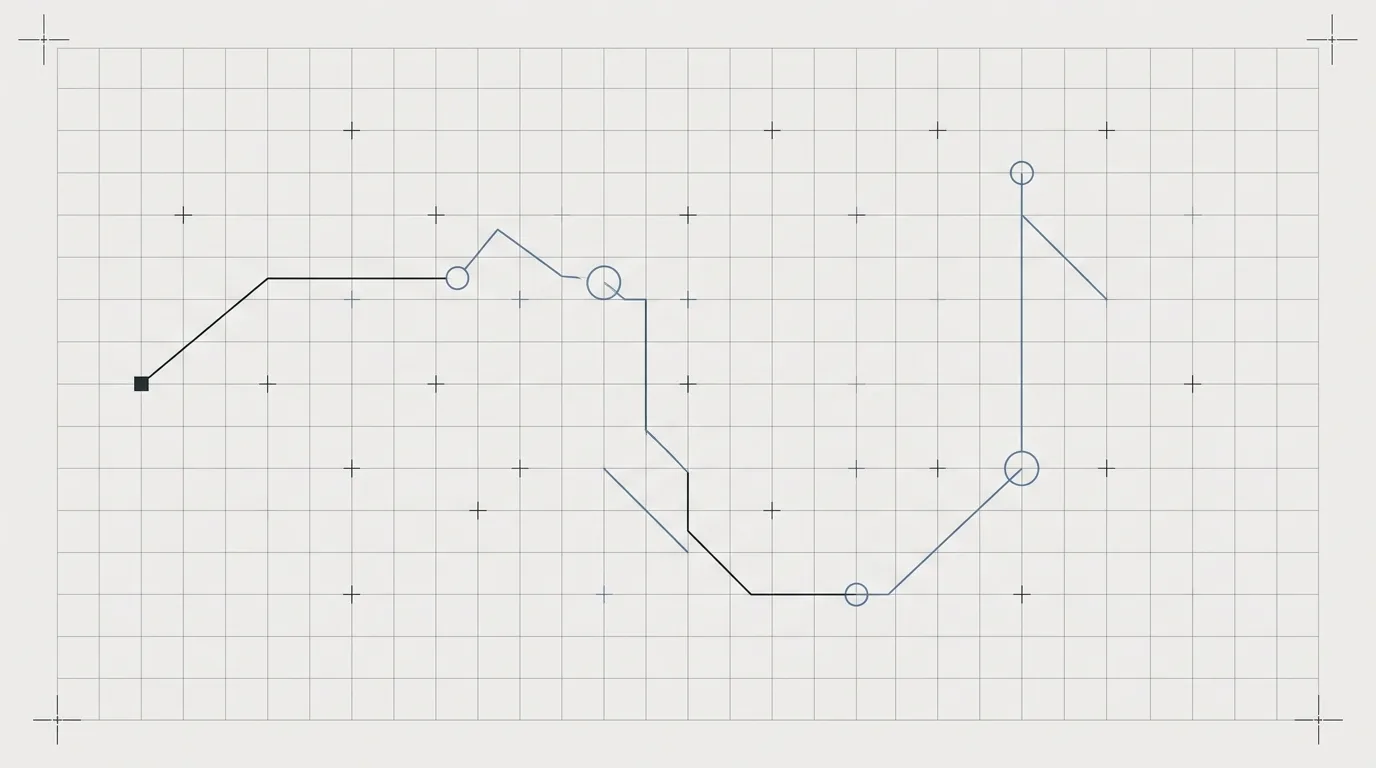
If you have asked a dispatcher how they plan daily runs, you have probably heard something like: "I know the area pretty well — I just sort the stops by suburb and it works out." That is route planning. It is also the reason most delivery businesses are spending 20–30% more on fuel than they need to.
Route optimization is different. It is not local knowledge encoded in a spreadsheet — it is a mathematical solver that computes the lowest-cost path across all stops, all drivers, all constraints, simultaneously. The difference in outcomes is significant, and understanding it helps businesses make a better software decision.
What is Route Planning
Route planning is the process of deciding which stops a driver (or fleet of drivers) will visit and in what general order, using human judgment, map tools, or basic sequencing features.
A typical route planning workflow looks like this:
- A dispatcher receives a list of delivery addresses for the day
- They group stops by suburb, postcode, or street area
- They create a rough sequence based on geography and local knowledge
- They assign groups of stops to individual drivers
- Drivers follow the order, adjusting on the road as needed
Route planning is not inherently bad — experienced dispatchers with strong local knowledge can produce reasonably good routes for simple, consistent runs. The problems emerge as soon as you add complexity: more stops, multiple drivers with different vehicle capacities, customer time windows, or priority deliveries.
Route planning tools include basic apps like Google Maps, Apple Maps, or a whiteboard. Some teams use spreadsheets with postcode sorting. More advanced planners use tools like MapPoint or simple stop-ordering apps.
What is Route Optimization
Route optimization uses purpose-built algorithms to calculate the mathematically best sequence and assignment of stops across one or more vehicles, while respecting all defined constraints simultaneously.
The difference is not cosmetic. Route optimization solves a class of problems called Vehicle Routing Problems (VRP), which includes constraints like:
- Vehicle load capacities (a van can carry 800 kg; stops 12, 17, and 23 combined weigh 820 kg — the optimizer accounts for this)
- Time windows (customer at stop 8 requires delivery between 9:00 and 10:30 am)
- Driver shift limits (a driver cannot legally be on the road for more than 10 hours)
- Priority assignments (key account stops are protected from delay)
- Multiple depot start and end locations
A skilled human dispatcher cannot hold all of these variables in their head across 40 stops and 5 drivers simultaneously. Optimization software can, and it does it in under 30 seconds.
For a detailed explanation of how the algorithms work, see the complete guide to route optimization.
Key Differences
| Dimension | Route Planning | Route Optimization |
|---|---|---|
| Core method | Human judgment + maps | Mathematical algorithms (VRP solvers) |
| Time to plan 30 stops / 3 drivers | 45–90 minutes | 10–30 seconds |
| Constraint handling | Manual, limited | Automated, comprehensive |
| Typical distance saving vs manual | 0–8% | 15–28% |
| Consistency | Varies by planner skill | Repeatable, objective |
| Scalability | Degrades above 15–20 stops | Handles 500+ stops reliably |
| Re-optimization on changes | Manual rework needed | Seconds |
| Cost | Free to low-cost tools | Subscription (typically $30–$120/driver/month) |
| Best fit | Very small, simple, consistent runs | Any fleet with variable stops, windows, or constraints |
When to Use Each
Route planning is sufficient when:
- You have 1–2 drivers with fewer than 10 stops each
- Stops are highly consistent day to day (same customers, same roads)
- No customer time windows or priority requirements exist
- You are a sole trader doing a milk run with fixed sequence
Route optimization is the right choice when:
- You have 3 or more drivers, or any driver with 15+ stops
- Customer time windows or delivery slots matter
- You need to balance workload across multiple vehicles
- You are growing and adding new customers regularly
- Fuel and vehicle costs are a meaningful portion of your expenses
- You want defensible SLA reporting for key accounts
The breakeven point: For most Australian delivery businesses, optimization software pays for itself at around 3 drivers with 15+ stops each. A 20% fuel saving on a three-van operation spending $3,000/month on fuel saves $600/month — which covers most mid-tier software subscriptions twice over.
Software Solutions
Most software products marketed as "route planners" include some degree of optimization — but the quality and depth varies significantly. Here is a practical breakdown:
If you are already comparing route optimization software vendors, use that commercial overview alongside this planning-vs-optimization breakdown.
Basic route planners (Google Maps, Apple Maps, Waze): Provide navigation and basic multi-stop sequencing but no true VRP optimization, no constraint modelling, no fleet dispatch. Suitable for solo drivers with simple fixed runs.
Mid-tier optimization tools (RoadWarrior, RouteXL): Include stop ordering optimization for a single driver or small team. Limited constraint handling. Good starting point for small operations.
Full route optimization platforms (RouteMate, OptimoRoute, Onfleet, Route4Me): Solve multi-vehicle VRP problems with full constraint modelling, real-time dispatch, driver mobile apps, proof of delivery, and analytics. These are the tools that deliver the 15–28% efficiency improvements.
For a full software comparison, see Best Route Optimization Software for Delivery Businesses (2026).
The distinction between a "route planner" and a "route optimizer" is not just marketing. It maps directly to the depth of the constraint modelling and the quality of the algorithms underneath. When evaluating tools, ask vendors specifically: does your platform solve the multi-vehicle VRP with time windows? The answer tells you whether you are buying a map tool or an optimizer.
For more on what route optimization actually delivers in practice, What is Route Optimization? covers the mechanics in detail.
Frequently Asked Questions
Can a basic route planner produce the same results as optimization software if you use it carefully?
For very small, consistent runs — yes, sometimes. But for any operation with variable daily stops, multiple drivers, or customer time windows, the gap widens quickly. Human planners consistently produce routes that are 15–25% longer than optimized equivalents in controlled tests.
Is the price difference between planning tools and optimization platforms worth it?
For fleets of 3 or more drivers, almost always. The fuel savings alone typically exceed the software cost by a 3:1 to 6:1 ratio. The additional benefits — dispatcher time saved, better SLA compliance, and reduced overtime — make the ROI case even stronger.
Do optimization platforms replace dispatchers?
No. They replace the manual computation work, not the judgment work. Dispatchers still manage driver issues, handle customer escalations, make judgment calls on priority re-sequencing, and manage the overall operation. They just spend their time on high-value decisions rather than manual route building.
What happens when a customer cancels or a new urgent stop is added mid-route?
A basic planner requires the dispatcher to manually rework the remaining stops. A route optimization platform re-solves the remaining route in seconds and pushes the updated sequence to the driver's phone automatically.
Choose Optimization, Not Just Planning — Try RouteMate
RouteMate is a full route optimization platform for Australian delivery businesses. It solves multi-vehicle routing problems with time windows, vehicle capacities, and priority constraints — in seconds. AI label scanning, real-time dispatch, and proof of delivery are included in every plan.